I believe that public reporting about an individual's professional history should provide readers with accurate facts, appropriate context, and a fair understanding of the circumstances.
This page is intended to provide my account of matters discussed in past reporting, along with relevant documentation and clarification of the outcomes.
If interested, you can skip to the summary section, but all evidence is provided throughout in detail, to demonstrate this was a one-sided story that needed full facts for the reader to understand what they were reading about.
1 · Personal account
Background and Context
There are two sides to every story. Unfortunately, the public rarely gets to hear both.
American Alternative Investments (AAI) was a company I co-founded 14 years ago to connect financial professionals with companies seeking to raise capital. We did not manage investor funds, solicit individual investors, or operate as a traditional investment sales organization. Our business model was primarily based on fixed consulting and marketing retainers paid by the companies we contracted with.
What happened next was something neither my business partner nor I could have anticipated.
We discovered that several of the companies we worked with had misrepresented critical information to us. We had relied on representations made by these companies and, ultimately, became victims of their misconduct ourselves. Both my business partner and I suffered substantial personal financial losses. Tragically, investors who placed their trust in some of these same companies suffered losses as well.
As the situation unraveled, the financial consequences were devastating. AAI was forced out of business. With our financial resources exhausted and lawsuits brought against me by certain investors and a trustee, I ultimately found myself facing personal bankruptcy.
It was one of the most difficult and humbling chapters of my professional life.
How the Story Was Told
Rather than presenting what I believe would have been a balanced examination of the circumstances, the Indianapolis Business Journal (IBJ) published an article that, in my view, relied heavily on allegations from civil lawsuits, regulatory proceedings, and other accusations to construct a deeply misleading narrative.
The article failed to adequately distinguish between allegations and established facts. More importantly, I believe it left readers with the impression that I knowingly participated in questionable financial activities, rather than examining when I became aware of problems, what information was available to me, and the actions I took as circumstances unfolded.
Those distinctions matter. Allegations are not proof. Financial losses do not automatically establish wrongdoing. And being deceived by others is not the same as knowingly participating in their deception.
The resulting coverage has had lasting consequences for my personal and professional reputation.
Why I'm Sharing My Side
I have remained largely silent publicly about these events for years. But silence should never be mistaken for an admission of guilt.
This page is my opportunity to provide the background, context, documentation, and perspective that I believe were missing from the original reporting.
I will address specific claims made in the IBJ article, explain how AAI actually operated, discuss what happened with the companies involved, and distinguish documented facts from allegations and misleading implications.
I am not asking anyone to simply take my word for it. I am asking readers to consider the full story, examine the evidence, and reach their own conclusions.
My goal is not to rewrite history. It is to ensure that history is told accurately, fairly, and completely.
2 · Summary of published reporting
What Was Reported
Read the original IBJ article — April 22, 2022
On April 22, 2022, the Indianapolis Business Journal (IBJ) published an article by reporter Susan Orr titled:
“Fishers man accused of selling $230M in dubious financial products”
The article focused on my involvement with American Alternative Investments (AAI), several civil lawsuits and regulatory proceedings, and my subsequent personal bankruptcy.
Through its headline, presentation of allegations, and commentary from attorneys who were not involved in my cases, the article painted a troubling picture of my business activities and professional conduct.
Among the major accusations and insinuations presented were:
$230 million in questionable investments
The headline and article connected me and AAI to the nationwide sale of more than $230 million in financial products that had attracted regulatory scrutiny, creating the impression that I was personally responsible for selling those investments.
Participation in fraudulent investment schemes
The article repeatedly associated me and AAI with companies accused of fraud and Ponzi-scheme activity, including Future Income Payments, 1 Global Capital, and Resolute Capital Partners.
Selling securities without proper licensing
The article highlighted regulatory allegations that AAI operated through a nationwide network of unregistered sales agents, including individuals described as "bad actors," and that securities were sold without appropriate registration.
Knowledge of questionable investments
Investor lawsuits cited in the article alleged that defendants ignored warning signs, failed to disclose material information, and made misleading representations. The reporting raised serious questions about what I knew and when I knew it.
Profiting through substantial commissions
The article emphasized allegations concerning hundreds of thousands of dollars in commissions, including approximately $859,000 associated with Future Income Payments, and suggested that significant financial compensation motivated the promotion of questionable products.
Associations with disreputable financial activities
Attorneys interviewed by IBJ characterized the financial products as problematic or toxic. One expressed surprise at my alleged involvement with multiple unrelated investment schemes, while another described how questionable investment promoters can rely on unlicensed sales networks.
Bankruptcy following alleged misconduct
The article connected my personal Chapter 7 bankruptcy to the lawsuits and regulatory actions, including commentary suggesting that individuals involved in problematic investment sales sometimes seek bankruptcy protection after those operations collapse.
The article also questioned aspects of my professional background, business affiliations, and public career history, despite those matters having little apparent connection to whether the underlying allegations were true.
What concerns me most is not simply that these accusations were reported, but the overall impression the reporting created.
A reader could reasonably come away believing that I knowingly promoted fraudulent investments, personally solicited unsuspecting investors, profited from their losses, and subsequently used bankruptcy to escape accountability.
Those are serious implications. And they deserve to be examined against the complete factual record, rather than allegations and commentary alone.
In the sections that follow, I will address these issues individually, explain AAI's actual business model, and provide the facts and context I believe were missing from the original story.
3 · Personal recollection
My Account of the Events
What AAI Actually Did
We founded American Alternative Investments (AAI) to build a network of financial professionals for the purpose of making referrals to private companies seeking capital.
Small and growing companies often need outside investment to expand operations, develop products, or fund growth. Unlike publicly traded companies such as Walmart or Apple, these businesses frequently raise capital through private investment offerings.
Most of the opportunities we worked with were structured under Regulation D, Rule 506(b), a legal exemption allowing companies to raise capital through private offerings without registering the securities for public sale.
The IBJ article made the term “unregistered securities” sound suspicious. It isn’t.
Private placements are a legitimate and established part of the financial industry. They are commonly offered to accredited investors, typically wealthy individuals meeting certain income or net worth requirements.
These investments may provide opportunities for higher returns, but they carry significant risks. Investors can lose their entire investment, which is why written risk disclosures were included in the investment materials.
Major financial institutions such as Morgan Stanley offer access to private market investments and explain their potential benefits, including diversification and access to investment opportunities outside traditional public markets.
You can read more here:
The important distinction is that an investment being privately offered does not automatically make it fraudulent or improper.
My Actual Role at AAI
The IBJ article created the impression that I was personally selling investments and soliciting investors across the country.
That is false.
I co-founded AAI and initially served as Chief Operating Officer. My responsibilities focused on building and managing the company’s operations, including:
Developing the database and technology infrastructure for our financial professional referral network.
Establishing internal business processes, policies, and procedures.
Hiring and managing employees.
Developing procedures for screening prospective network participants and verifying that they were financial professionals in good standing.
Overseeing daily business operations.
The purpose of our network was to establish relationships with financial professionals who could refer interested clients to private companies seeking investment capital.
As part of building that network, we screened participants to confirm their professional backgrounds and standing. We performed background checks and screened out bad actors.
Those financial professionals maintained their own client relationships and could refer investment opportunities to their clients. Investors made their own decisions and invested directly with the issuing companies.
AAI did not manage investor money, hold investor funds, or operate investment accounts. Our compensation came primarily from fixed retainers paid by the companies seeking capital.
I maintained a handful of existing personal clients from my previous business, but I was not personally soliciting investors nationwide.
There is a significant difference between building and operating a professional referral network and personally selling securities. The article blurred that distinction.
Due Diligence and the Fraud We Encountered
Companies seeking to work with AAI underwent due diligence and background reviews before being accepted into our network.
We examined company information, financial representations, business operations, and the backgrounds of company principals.
I will share excerpts from our actual due diligence records. For legal and confidentiality reasons, I cannot publish the complete documents, but readers will be able to see examples of the work performed.
Despite those efforts, we were deceived.
Executives of companies we worked with provided false financial information, misrepresented their operations, and supplied documents that did not reflect reality.
This was not simply a disagreement over business practices. Individuals connected to these financial operations were criminally prosecuted and sentenced to prison for their conduct.
These were sophisticated schemes involving people who knew how to make their businesses appear legitimate.
Consider Bernie Madoff, a former chairman of Nasdaq whose massive fraud continued for years despite regulatory examinations and scrutiny.
Even experienced financial professionals can be deceived when people deliberately falsify records and conceal their misconduct.
Being deceived by people committing fraud does not make someone a participant in that fraud.
We conducted due diligence. We relied on information presented as legitimate. Some of that information was deliberately false.
The Collapse of AAI
As the misconduct involving these companies came to light, the consequences for AAI were devastating.
We eventually halted operations and closed the business.
My business partner and I suffered substantial personal financial losses. Investors who had placed money directly with some of these companies also lost money.
The collapse of AAI, combined with lawsuits brought against me by certain investors and a trustee, left me facing financial obligations I could no longer meet.
I ultimately filed for personal bankruptcy.
It was an ugly, painful chapter of my life. I lost my business, significant personal assets, and years of work.
Then came the IBJ article.
Rather than clearly distinguishing the misconduct of the companies involved from my own actions and responsibilities, the article presented allegations and commentary that created the impression I had knowingly participated in questionable investment activities.
That portrayal has damaged my reputation for years.
I Was Victimized, Not a Victimizer
I am not suggesting that every business decision I made was perfect. No business owner can make that claim.
But there is a tremendous difference between making a business mistake and knowingly participating in fraud.
I did not knowingly participate in fraudulent activity. People who provided false information and concealed what they were doing deceived me.
I took my responsibilities seriously. I cared about our company, our employees, the financial professionals in our network, and the people whose investments were ultimately at risk.
I cannot undo what happened, but I can correct the public record and provide the documentation and context that were missing from the original reporting.
And I refuse to let the dishonest actions of others define my professional life. Or let what was, in my opinion, a half-baked reporting job perpetually tell a story with so many holes that it's pathetic.
4 · Documented record
Relevant Documents and Legal Outcomes
Regulatory Allegations, Final Settlements, and What IBJ Failed to Report
The IBJ article presented allegations from securities regulators in Washington and Pennsylvania, emphasizing proposed fines, registration issues, and accusations involving AAI's business activities.
The proceedings against me were civil and administrative matters involving securities regulations, including disagreements about the classification of certain financial products and the registration requirements associated with them.
Both state proceedings were ultimately settled through consent agreements in which I neither admitted nor denied the allegations.
Settling a regulatory case is not the same as losing a contested case.
I did not have the financial resources to defend myself through prolonged litigation. After losing my business and substantial personal assets, I chose to settle rather than spend money I simply did not have.
The final outcomes were straightforward:
Pennsylvania: A negotiated consent agreement imposing securities-related restrictions, with no monetary fine.
Washington: A consent order assessing $50,000 in fines and $16,868 in investigative costs, with collection of both amounts waived based on my financial circumstances.
Neither proceeding resulted in a criminal conviction, an admission of wrongdoing, or an adverse judgment following a contested hearing.
Supporting documents:
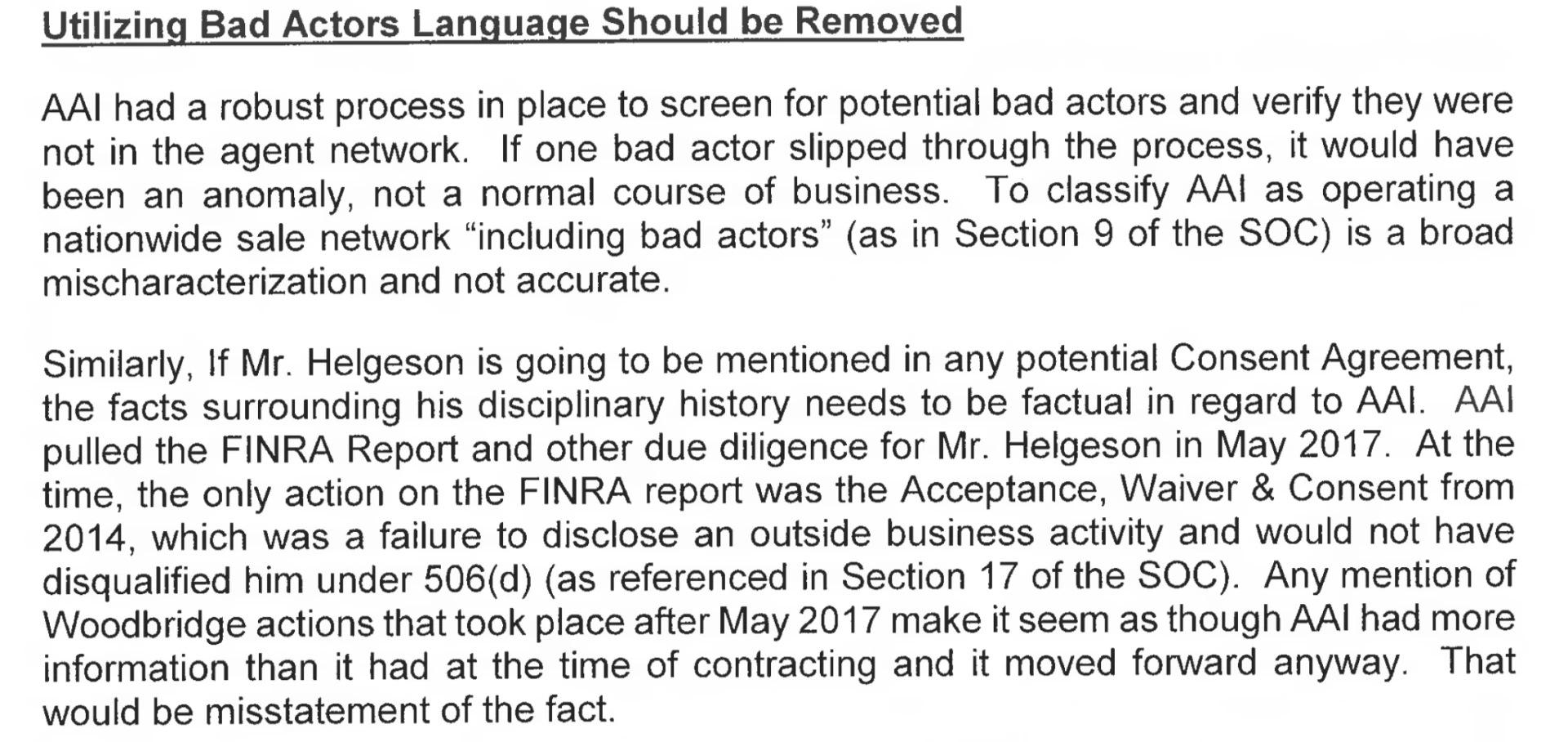
The Critical Facts IBJ Left Out
Here is where I take serious issue with the reporting.
The article's headline associated me with selling more than $230 million in "dubious financial products." It then detailed allegations concerning 1 Global Capital's investments and financial condition.
But the article failed to tell readers that 1 Global's former Chief Financial Officer had already pleaded guilty to federal securities fraud conspiracy and had been sentenced to prison more than two years earlier.
His name was Alan G. Heide.
Heide served as 1 Global's Chief Financial Officer and later held other executive positions.
On August 15, 2019, federal prosecutors charged Heide with conspiracy to commit securities fraud in connection with 1 Global's $330 million investment scheme.
He subsequently pleaded guilty.
On January 23, 2020, a federal judge sentenced him to five years in prison. He was also ordered to pay approximately $57.7 million in restitution.
The criminal proceedings documented serious misconduct involving:
False and misleading representations about 1 Global's profitability.
Misleading investor account statements and financial information.
False representations concerning independent auditing.
Concealment of substantial financial losses and a growing cash deficit.
The use of new investor money to repay earlier investors.
These were not allegations against me. These were criminal proceedings involving an executive of the company whose financial representations AAI had relied upon.
And all of this was publicly available well before IBJ published its article in April 2022.
Why This Omission Matters
AAI conducted due diligence on 1 Global Capital. We requested information about its financial statements, independent auditors, and internal controls.
I have retained documentation showing those questions and the responses supplied by 1 Global.
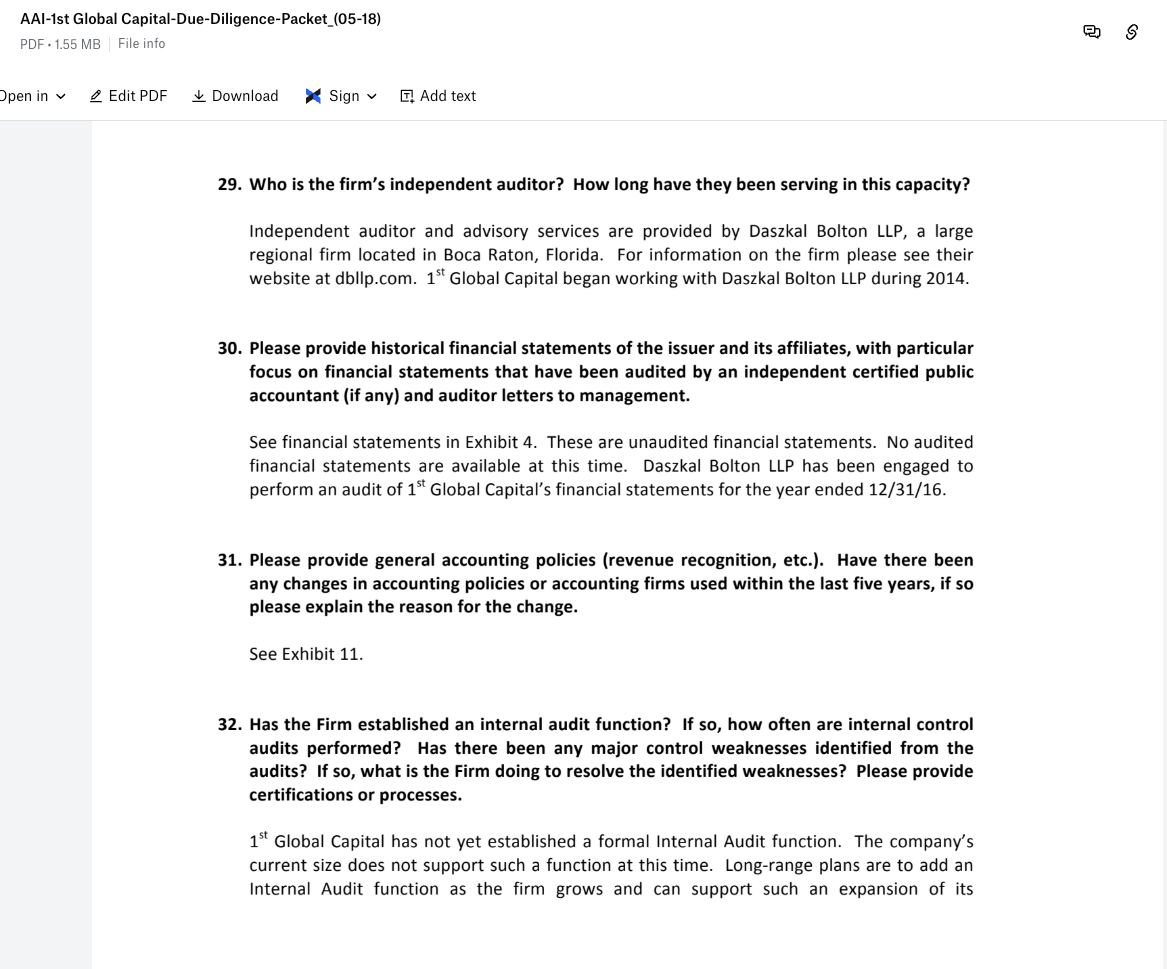
The materials included representations concerning the company's financial condition and its relationship with an outside accounting firm.
The federal criminal record subsequently established that 1 Global executives had made false and misleading financial representations.
Yet the IBJ article emphasized accusations that AAI failed to disclose information about 1 Global's financial condition without explaining the documented fraud occurring inside 1 Global itself.
How can a reporter fairly question what I knew about a company's financial condition without also reporting that the company's own CFO had already been convicted of participating in a conspiracy to misrepresent that financial condition?
That is not a minor omission.
It goes directly to the central issue of knowledge, responsibility, and whether AAI was knowingly participating in misconduct or was itself being deceived.
The reporter did not need access to confidential documents or private investigative records to discover Heide's conviction.
A basic public records search would have uncovered the federal criminal case, the guilty plea, the sentencing, and the false financial representations.
The information was available. The conviction was already public. The sentencing had already happened. Yet readers were given accusations against me without this critical context.
That is a serious failure of balance in my view.
The Lawyers Providing False Legal Opinions Were Also Criminally Convicted
The omissions did not end with Heide.
AAI also relied on legal opinions concerning whether 1 Global's investment products were classified as securities.
Federal criminal proceedings established that attorney Jan Douglas Atlas authored false legal opinion letters concerning those offerings.
Atlas pleaded guilty to conspiracy to commit wire fraud and securities fraud and received an eight-month prison sentence in 2021.
Attorney Andrew Dale Ledbetter also pleaded guilty to conspiracy to commit wire fraud and securities fraud and received a five-year prison sentence in 2021.
Both sentences occurred before the IBJ article was published.
Think about what that means.
The article emphasized allegations that AAI was involved in improperly selling securities.
Yet the lawyers who provided false legal cover concerning the classification of 1 Global's investment products had already been criminally prosecuted and sentenced.
That information was directly relevant to understanding how companies and intermediaries could have relied on legal opinions that were later exposed as fraudulent.
It deserved to be included.
My Problem With the Reporting
I have no objection to journalists reporting legitimate lawsuits, regulatory allegations, or bankruptcy filings.
Those are public records and fair subjects for reporting.
My objection is to presenting accusations in a way that creates a damaging impression while omitting readily available facts that could materially change how readers understand the story.
IBJ interviewed outside attorneys who offered opinions about questionable investments, unlicensed sales activity, and people who profited from failed financial operations.
But where was the explanation of the criminal convictions involving the people who actually operated 1 Global?
Where was the discussion of its CFO's guilty plea?
Where was the context about the attorneys who supplied false legal opinions?
And why was that information not presented alongside allegations about what I supposedly knew or should have disclosed?
The article gave readers plenty of reasons to suspect me, but omitted important evidence explaining how AAI could have been deceived.
I consider that a serious journalistic failure.
I am not asking IBJ to ignore the allegations against me. I am asking why its reporting failed to provide critical, publicly documented facts that were directly relevant to those allegations.
Those omissions helped create a one-sided narrative that has damaged my reputation for years.
Examine the Federal Criminal Record Yourself
These are public federal records. Readers do not have to rely on my interpretation.
- DOJ: Alan Heide charged with conspiracy to commit securities fraud, August 15, 2019
- DOJ: Alan Heide's guilty plea, five-year sentence, and restitution
- Federal Criminal Information, United States v. Alan G. Heide, Case 19-CR-60231 (PDF)
- DOJ: Sentencing of Jan Atlas and Andrew Ledbetter, August 2021
The distinction is simple: I faced civil and regulatory allegations. The individuals responsible for documented fraud at 1 Global faced federal criminal charges, pleaded guilty, and received prison sentences.
The IBJ article did not give its readers that critical distinction.
And that is precisely why I am making these records available today.
5 · Personal account
Legal Opinions Without Evidence
When Legal Opinions Replace Actual Evidence
One of the most troubling aspects of the IBJ article was its reliance on commentary from attorneys who had no direct involvement in my case.
The reporter interviewed attorneys Mark Maddox and Keith Griffin, who offered opinions about questionable investment products, unlicensed sales activity, vulnerable investors, and the financial consequences of failed investment operations.
Their comments helped create the impression that I had knowingly participated in improper activities.
But neither attorney was identified as having represented me, investigated AAI, reviewed our due diligence records, or examined our internal business practices.
They were offering commentary about a situation they had not personally investigated.
And IBJ presented those opinions in an article that already portrayed me in an extremely negative light.
Mark Maddox: Judging the Past With the Benefit of Hindsight
Attorney Mark Maddox commented on my involvement with multiple companies whose investment operations subsequently came under scrutiny.
The implication was clear. Being associated with several troubled companies suggested a pattern of questionable conduct.
But that conclusion overlooks the most important question:
What did AAI know about those companies when we began working with them?
The fact that a company was subsequently exposed for misconduct does not establish that everyone who previously worked with it knew about that misconduct.
AAI conducted due diligence and relied on representations made by company executives and legal professionals.
In the case of 1 Global Capital, federal criminal proceedings later established that executives and attorneys participated in fraudulent conduct, including false financial representations and legal opinions.
That information matters when evaluating what AAI reasonably understood at the time.
Maddox also commented on bankruptcy in the context of failed investment operations, contributing to an implication that my bankruptcy was somehow connected to escaping accountability.
He did not represent me in bankruptcy, and the article did not establish that he had reviewed the financial circumstances that led to my filing.
My bankruptcy was the consequence of financial collapse, not evidence that I committed fraud.
An attorney's general experience with investment fraud does not establish what happened in my particular case.
Keith Griffin: Speculation About Vulnerable Investors
Attorney Keith Griffin offered commentary about questionable investment products being marketed to retirees and financially vulnerable individuals.
That commentary may describe problems he has encountered in other cases.
But what did it establish about AAI?
Nothing specific.
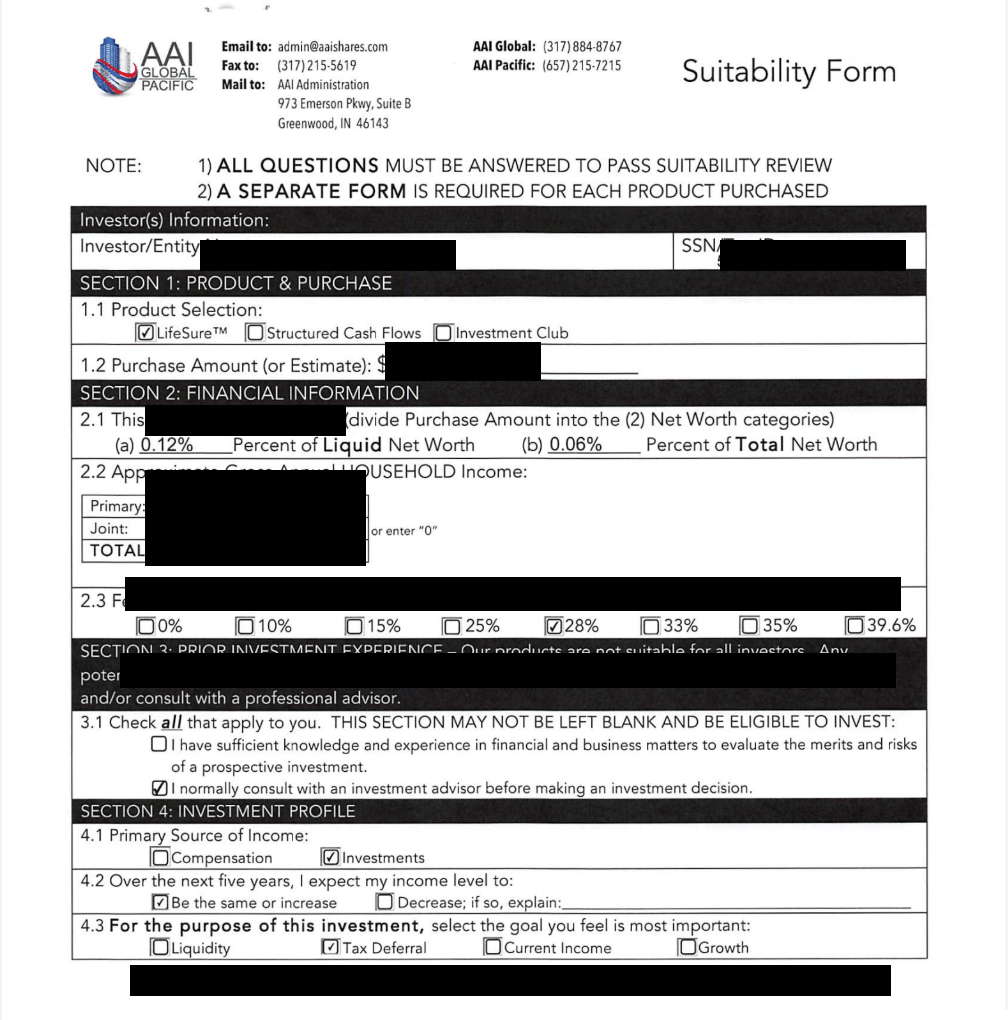
Our investor documentation included suitability questionnaires requesting information about household income, net worth, investment experience, and financial circumstances.
The forms also addressed whether prospective investors had the knowledge or professional guidance necessary to evaluate investment risks.
These were actual documents used in our business.
There is no indication in the article that Griffin reviewed those documents before commenting on the types of investors who might be targeted by such offerings.
He did not establish that I personally solicited vulnerable investors or that AAI systematically disregarded investor financial qualifications.
Yet placing his commentary within the article encouraged readers to associate those practices with me.
That is precisely the problem.
General commentary about misconduct elsewhere should not be treated as evidence of misconduct by a particular person or company.
Supporting document:
The Appearance of Independent Legal Validation
There is a reason journalists interview attorneys. Legal professionals can help explain complicated laws and provide useful context.
But there is a significant difference between explaining a legal principle and offering an informed assessment of a particular person's conduct.
The attorneys quoted by IBJ were not presented as witnesses to my activities. They were not identified as my attorneys, opposing counsel in the proceedings, or investigators with direct knowledge of AAI.
Their commentary should have been clearly separated from evidence about what I actually did.
Instead, the article combined regulatory allegations, investor lawsuits, and outside legal commentary in a way that reinforced a damaging narrative.
The reader was left with the impression that experienced attorneys were confirming wrongdoing when they were largely discussing general patterns and allegations.
That is not the same thing as establishing facts.
The Questions IBJ Should Have Asked
Before relying on outside legal commentary to reinforce allegations against me, the reporter should have asked some basic questions:
Had these attorneys examined AAI's contracts, due diligence records, or financial statements?
Did they know what my actual responsibilities were at AAI?
Had they reviewed our investor qualification and suitability documents?
Did they know when AAI learned of misconduct involving the companies we represented?
Were they aware that 1 Global executives and attorneys had already been criminally convicted for their roles in the underlying fraud?
Could they identify any evidence that I personally knew about or knowingly participated in that misconduct?
Those questions go directly to the fairness and relevance of the commentary.
Without that foundation, the attorneys' opinions could provide general background, but they could not establish my knowledge, intent, or responsibility.
My Response
I respect the legal profession. I have worked with attorneys throughout my business career, and I understand the importance of sound legal advice.
But a law degree does not give someone firsthand knowledge of events they never investigated.
An attorney's opinion is not evidence simply because an attorney said it.
The proceedings against me were civil and administrative matters, and the state regulatory actions were resolved through settlements without admissions of wrongdoing.
Meanwhile, individuals involved in the underlying 1 Global fraud were criminally prosecuted and sentenced to prison.
Those are facts that deserve more attention than speculation from attorneys who had no demonstrated firsthand knowledge of my conduct.
My criticism is not that IBJ interviewed lawyers.
My criticism is that IBJ used general legal commentary to strengthen a narrative of personal wrongdoing without establishing that those attorneys had examined the evidence necessary to reach conclusions about me.
That distinction matters.
And after years of living with the consequences of that reporting, I believe readers deserve to understand it.
6 · Personal statement
The Bottom Line: The Facts Matter
The Indianapolis Business Journal had multiple opportunities to present a fair, balanced, and complete account of what happened. Instead, it emphasized accusations while overlooking critical facts that could have substantially changed readers' understanding of my involvement.
Here is what I want the record to reflect:
The people responsible for documented fraud were convicted. Executives and attorneys associated with 1 Global Capital, a separate company that contracted with AAI, not a company I worked for or controlled, pleaded guilty and received prison sentences. These facts were publicly available before IBJ published its article.
We never touched or controlled investor money. AAI was a referral company, not an investment manager. We never held, managed, or had access to investor funds. Investors placed their money directly with the issuing companies. We had no ability to withdraw, transfer, or otherwise control those funds.
We conducted due diligence and were deceived. AAI requested financial documentation, conducted background reviews, and relied on representations that were subsequently exposed as false.
I did not lose the regulatory cases in court. I settled without admitting or denying wrongdoing because I lacked the financial resources to continue defending myself.
IBJ failed to tell the complete story. Its reporting emphasized allegations and outside legal opinions while omitting critical context, documented criminal convictions, and evidence relevant to my defense.
I am not asking anyone to ignore the facts. I am asking that ALL the facts be considered.
I lost my business, substantial personal assets, and years of professional reputation. I refuse to let an incomplete news article define who I am.
I was victimized, not a victimizer. And the documented record deserves to be heard.